
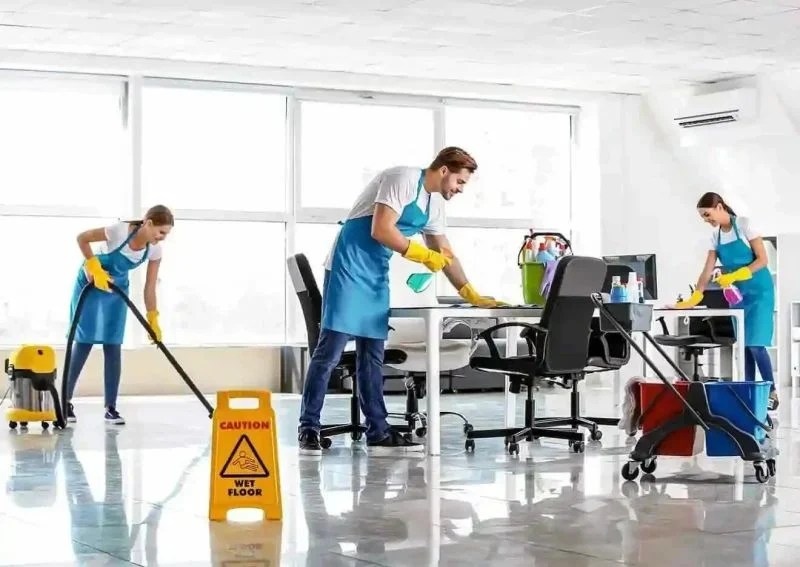
The phrase gets used loosely enough that businesses often buy something different from what they expected. Some assume it means an office cleaner attending after hours; others assume it covers anything from window cleaning to industrial degreasing. Understanding what is commercial cleaning services in practice the scope, the standards and the operating model makes it far easier to specify what your premises actually require.
The Basic Definition
Commercial cleaning refers to professional cleaning of non-residential premises, delivered by trained staff working to a defined specification, usually under a contract with agreed frequencies and standards. The distinction from domestic cleaning is not simply scale. It involves different equipment, industrial-grade chemistry, formal training in handling and safety, insurance appropriate to business premises, and documentation demonstrating that the work meets whatever standards apply to that environment.
What It Typically Covers
The core is routine cleaning: waste removal, washroom servicing, pantry and kitchen areas, floor care, surface cleaning and touch point disinfection on defined cycles. Around that sit periodic services carpet and upholstery cleaning, high-level dusting, window cleaning, floor stripping and sealing, deep kitchen cleaning. Specialist work covers post-construction clean-up, industrial and plant cleaning, and specific hygiene requirements in healthcare or food environments. Mapping your premises against these categories is the quickest way to see which ones you genuinely need.
Who Actually Needs It
Almost every non-residential premises does, though for different reasons. Offices need it for occupant health, presentation to visitors and staff retention. Retail needs it because appearance directly affects sales. Food premises need it because regulation requires documented standards. Healthcare and childcare need it because infection control is a clinical matter. Industrial sites need it because accumulated contamination creates fire, slip and equipment-failure risks. Education needs it because contamination spreads rapidly in dense populations. Property managers need it for common areas that no single tenant will maintain.
Contract Cleaning Versus One-Off Work
Two distinct models exist. Contract cleaning provides regular attendance at agreed frequencies against a written specification this is what most businesses need for day-to-day upkeep, and it produces consistency because the same staff learn the site. One-off or project work covers specific requirements: a move-in or move-out clean, post-renovation clearance, an annual deep clean, or reactive response after an incident. Most organisations end up using both, and reviewing the types of commercial cleaning services available clarifies which periodic items belong inside the contract and which are better commissioned separately.
What Distinguishes a Professional Operation
Several things separate a genuine provider from a small operation with a van. Directly employed staff who are trained and stay long enough to learn a site. Supervision that physically attends rather than existing on paper. Cover arrangements for absence, which is where service most commonly fails. Proper insurance and worker protection. Equipment maintained to standard, particularly vacuum filtration. Documented method statements and safety data sheets. And a monitoring system that makes performance visible rather than relying on complaints.
Getting the Specification Right
The most common procurement failure is a vague brief. A workable specification lists areas with approximate square metres, tasks by frequency, consumables responsibility, access hours and any special requirements. Without it, quotations describe different work and cannot be compared, and disputes follow within months. A good provider will usually help draft this, and a specification produced jointly tends to be more realistic than one written in isolation.
Understanding How It Is Priced
Cleaning is a labour business. Price largely reflects hours on site multiplied by a labour rate, plus consumables, equipment and margin. This means a quotation significantly below the others almost always represents fewer hours rather than greater efficiency, and fewer hours means tasks quietly dropped. Asking each provider to state the weekly hours and headcount they have allowed exposes this immediately and makes comparison meaningful in a way the monthly figure never does.
Frequency and Timing Decisions
How often and when both affect cost and outcome. Occupancy should drive frequency, with washrooms serviced daily regardless of headcount because that is where standards are judged. Timing is a choice between out-of-hours work, which is unobtrusive but invisible, and day cleaning, which costs slightly more but allows issues to be resolved immediately. Many organisations now combine a light day presence with a main out-of-hours clean, and deciding this before tendering affects the pricing structure significantly. Established providers of professional office cleaning services will price both models so the comparison can be made properly.
Managing the Relationship
Standards drift unless someone measures them. A monthly inspection scored against the specification, a complaint log, and a quarterly review covering performance and any change in occupancy keeps an arrangement healthy. None of this is burdensome, and it is the difference between a contract that still delivers in year three and one that quietly deteriorated in month six while everyone was busy with something else.
For businesses making this move for the first time, the transition is easier than expected. The provider surveys the premises, drafts a specification against what they find, and proposes frequencies and a price. The main decision required from you is where standards genuinely matter and where they do not, which is a question worth answering deliberately rather than inheriting from whatever arrangement grew up by default.

